It starts with a slow bathroom sink, a running toilet, or a drip beneath the kitchen cabinet. You watch a quick tutorial, grab a wrench, and think, “I can probably handle this.”
Sometimes, you can. Not every plumbing problem requires a service call. But there’s a difference between a manageable maintenance task and a repair that turns into a bigger project halfway through.
The key is knowing your limits—and recognizing when a quick fix is only hiding the problem. Here are common DIY plumbing mistakes. Homeowners should watch for them, know how to avoid them, and know when to call a plumber.
Common DIY Plumbing Mistakes—and What to Do Instead
1. Overtightening Connections
When a fitting leaks, tightening it seems like the obvious solution. But tighter does not always mean better. Overtightening plastic drain connections can crack them, creating another leak instead of stopping the first one.
What to do instead: Follow the installation instructions for the specific fitting. If a connection still leaks after proper assembly, stop rather than applying more force. The problem may need a closer look—not a stronger grip.
2. Reaching for Chemical Drain Cleaner First
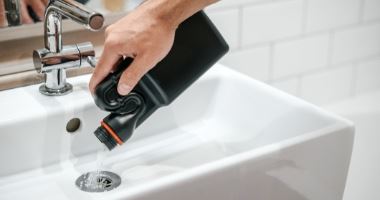
A bottle of drain cleaner can feel like the fastest way to deal with standing water. However, many chemical drain cleaners contain highly corrosive ingredients that can cause serious burns. Mixing household cleaning products can also create dangerous fumes.
What to do instead: For a minor clog, start with an appropriate nonchemical approach, such as removing accessible hair from a drain opening or using the correct plunger. Never mix drain products or add another cleaner to a drain that has already been treated. If you’ve used a chemical product and need professional help, tell the plumber what you used before work begins.
3. Treating a Recurring Problem Like a One-Time Clog
You clear the sink, it drains normally for a few days, and then the slowdown returns. It’s tempting to repeat the same fix and move on.
But a temporarily clear drain does not tell you why the problem keeps happening. Professional inspection can include a camera evaluation of drain and sewer lines to identify blockages or intrusion rather than relying on repeated guesswork.
What to do instead: Pay attention to patterns. Note which fixtures are affected, how often the problem returns, and whether using one fixture affects another. Share those details when scheduling service.
4. Ignoring a Small Leak After a “Mostly Successful” Repair
A connection that only drips occasionally is not fully repaired. Neither is a cabinet that stays damp after you’ve wiped it dry.
The EPA warns that leaks can waste water and cause serious damage inside a home. Leaving a small leak unresolved gives it more time to affect the surrounding area.
What to do instead: Check the repair while the fixture is operating and again afterward. Look for fresh moisture, not just an obvious puddle. If the leak returns—or you cannot identify its source—stop treating it as a finished project.
5. Guessing at the Cause of a Running Toilet
A running toilet may send you straight to the hardware store for a new flapper. But replacing a part without confirming the source of the leak can turn a simple project into several rounds of trial and error.
A toilet dye test can help identify water leaking from the tank into the bowl: add a few drops of food coloring to the tank, wait about 10 minutes without flushing, and check the bowl. Color in the bowl indicates a leak. Flush afterward to help prevent staining.
What to do instead: Diagnose before buying parts. If you’re unsure which component has failed, professional toilet service can evaluate the flapper, fill valve, flush valve, supply connections, and other potential trouble spots.
Why DIY Mistakes Can Cost More Long-Term
The real cost of a plumbing mistake is not always the replacement part. It’s what happens while the underlying problem remains unresolved.
An ongoing leak can waste water and damage your home. A higher-than-usual water bill may also be a clue that a leak is going unnoticed.
There’s also the cost of repeated attempts: another tool, another replacement part, and another afternoon spent on a repair that still isn’t working.
That doesn’t mean every DIY project is a bad idea. It means the cheapest first step is not always the least expensive overall solution. When you cannot identify the cause—or the same problem keeps returning—an inspection can replace guesswork with a clearer repair plan.
When Is It Reasonable to Try DIY Plumbing?
A useful rule: keep DIY work small, accessible, and easy to stop.
Low-risk starting points include:
- Checking visible pipes and fixtures for moisture.
- Testing a toilet for a tank-to-bowl leak.
- Removing accessible hair or debris from a drain opening without dismantling hidden plumbing.
- Using the appropriate plunger for a simple clog, provided no chemical cleaner has been added.
Routine leak checks and basic toilet testing can help homeowners spot problems early, while proper plunging techniques can help address straightforward clogs.
Before starting any task, read the fixture or product instructions and decide where your stopping point will be. If the work requires more force, more disassembly, or more uncertainty than you expected, pause.
A successful DIY decision can be recognizing that the next step belongs to a professional.
When to Call a Plumber
You don’t have to wait for a flooded bathroom to ask for help. Consider a professional inspection when:
- A leak continues after your repair attempt.
- A drain repeatedly slows down or backs up.
- You find unexplained moisture, staining, or dampness.
- Your water bill rises without an obvious change in use.
- You cannot confidently identify the source of the problem.
- The work involves hidden piping, sewer lines, gas connections, or water-heater safety concerns.
Unexplained moisture and unusual water use are reasons to investigate a potential leak. Pure Water Plumbing & Rooter’s inspection services also cover supply lines, shut-off valves, fixtures, drains, sewer lines, and water heaters, helping homeowners evaluate problems beyond what’s visible at the surface.
If water is actively leaking, stop the project and shut off the affected fixture’s water supply—or the home’s main shut-off valve—if you can safely access and operate it. Don’t force a stuck valve or keep using a fixture that is making the situation worse.
Schedule a Plumbing Inspection
If you’ve started searching “plumber near me” after another unsuccessful repair, you don’t need another round of trial and error.
Pure Water Plumbing & Rooter provides plumbing inspections in Antioch to evaluate leaks, fixtures, shut-off valves, drain and sewer concerns, and water-heater condition. An inspection can help you understand what needs attention before you commit to the next repair.
Call Pure Water Plumbing & Rooter at (925) 268-7662 to schedule a plumbing inspection and get a clearer picture of what’s happening in your home.